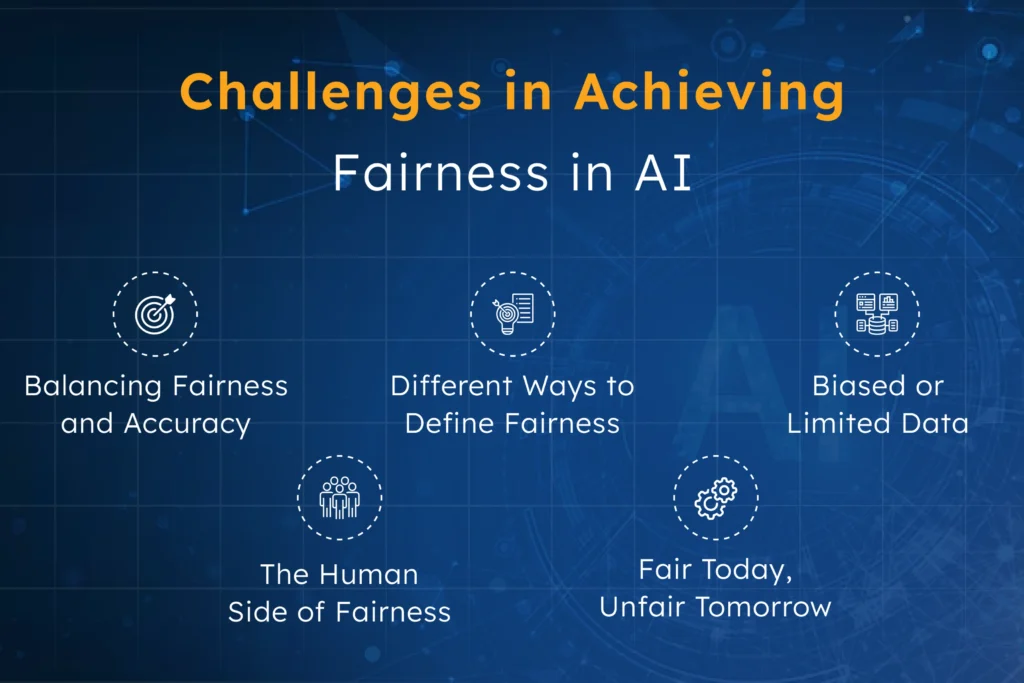
Challenges in Achieving Fairness in AI
Making AI fair sounds simple, but in practice, it comes with real challenges. Partnering with an experienced AI agent development company can help address these effectively. Here are some of the most common challenges:
Balancing Fairness and Accuracy
Improving fairness for one group can sometimes lower accuracy for another. Striking the right balance depends on the goal of the system.
Different Ways to Define Fairness
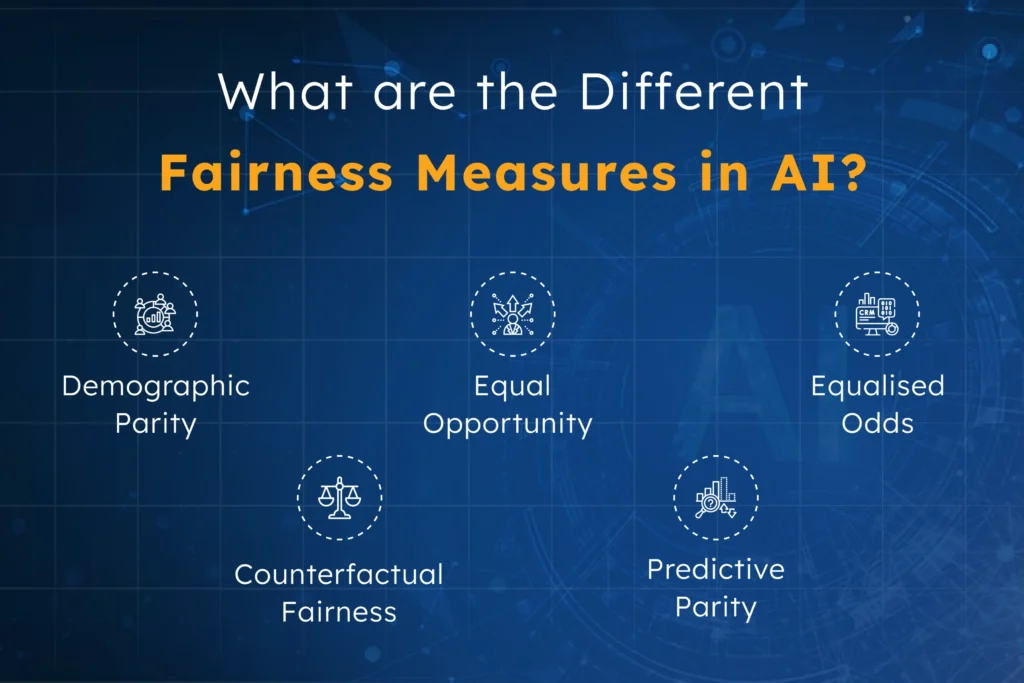
Not all fairness measures can be achieved at the same time. Meeting one measure, like demographic parity, may break another, like equal opportunity. Teams have to decide what matters most.
AI learns from data. If the data is biased or incomplete, the system will carry those same flaws. Clean, balanced datasets are often hard to find.
The Human Side of Fairness
Fairness isn’t just about numbers. What seems fair in one context may not be fair in another. Human judgment is always part of the process.
Fair Today, Unfair Tomorrow
An AI system may look fair at first, but new data can create new bias. Ongoing monitoring is always needed.
Can AI Ever Be Truly Fair?
This is the big question. AI is built on data, and all data comes from the real world. A world that is not always fair. Because of this, complete fairness in AI may never be fully possible.
But that does not mean fairness measures are pointless. Each step taken to reduce bias makes AI systems more trustworthy, more accurate, and more useful. Fairness is not a final destination; it’s an ongoing effort.
The goal is not “perfect fairness.” The goal is to keep improving AI so that it treats people more fairly over time. With the right tools, oversight, and expertise, AI can move closer to that goal every day.
How Fairness Will Shape the Future of AI
Fairness in AI is still evolving. As technology grows, so does the need to make it more transparent, ethical, and trustworthy. Users are more likely to choose ethical, transparent tools backed by advanced AI agent development services. Here’s how fairness is likely to shape the future:
Stronger Regulations
Governments are starting to set rules around AI. Soon, fairness will not just be best practice; it will be the law.
Better Tools for Developers
New tools are being built to help developers test AI for bias. This will make it easier to catch problems early and build fairer systems.
More Human Oversight
Even as AI gets smarter, people will still guide fairness. Human reviews will stay important to keep decisions ethical.
Fairness as a Business Edge
Companies that focus on fairness will gain trust. Users are more likely to choose AI products that are ethical and transparent.
Continuous Growth in Fairness
Fairness methods are always improving. New measures and practices will keep shaping how AI is built and used.
The future of AI depends on trust, and fairness is the foundation of that trust. Businesses that use and value fairness today will be ready for tomorrow’s standard and earn stronger relationships with their users.






 explore more