


In the startup world that is so fast-paced, Minimum Viable Product (MVP) and Minimum Marketable Product (MMP) are often seen as two options, but in reality, they complement each other. While the primary function of a Minimum Viable Product is to validate the fundamental functionality of the product, building one through a trusted MVP development service ensures that startups can efficiently test ideas before scaling. On the other hand, MMP begins from the validated concept and gets the product ready for real market launch.
The MVP helps uncover technical gaps, model limitations, and user behaviour. Once this is refined, the MMP adds the value proposition and makes the product ready for the market. So the ultimate takeaway from the blog of MVP vs MMP is simple: “You don’t need to choose one over the other-you need both.” Both MVP and MMP play distinct roles in building, testing, and scaling products and services effectively.
A Minimum Viable Product (MVP) is the earliest and simplest version of the product that includes only the most essential features required to validate an idea and solve the core problem for early users, while also receiving feedback. In simple terms, this is a functional and cost-effective product, as minimal risk is involved, and it can be released quickly to check whether the product satisfies the needs of the users.
MVP does not mean launching something incomplete; rather, it is about launching something very intentional and focused, while having the core value proposition intact, so that one can learn about a particular product or service with the least amount of effort. For a step-by-step guide on how to structure this process effectively, you can follow our detailed MVP development checklist.
When building an AI startup or any digital product, starting with an MVP (Minimum Viable Product) is often the smartest approach. An MVP allows companies to validate their ideas in real-world conditions, without investing heavily up front. Instead of launching a full-fledged product, startups can focus on the essentials, gather real user feedback, and refine their product before scaling.
The MVP only includes the must-have features that help in solving the primary problem that the users are facing. This matters because including too many features initially can dilute the purpose, increase the cost, and delay the launch.
A simple example of this can be while creating an AI writing tool, the MVP can only include generating a short paragraph based on the prompt given, without first including the formatting tools, grammar suggestions, or any further integrations at this stage. If you are planning to build something similar, partnering with an experienced AI app development company can help you launch a reliable MVP quickly and effectively.
An MVP should be built in weeks, not months, as the entire goal of this step is to enter the market quickly to learn from the real user behavior. This feature turns out to be an important feature of MVP because the faster a startup gets feedback, the sooner they can fix the problem or pivot their ideas.
While an MVP is built fast, it still serves as the foundation for the entire product. MVP can be considered as the foundation because it uses scalable backend services along with a clean and organised codebase.
The MVP is built in a way that allows quick iterations based on feedback. The real value of an MVP comes after launch. This feature proves to be important because users do not always behave as expected.
Additionally, some features may work well, while others may not be needed at all. Thus, it is important to understand that Product-market fit is discovered through multiple iterations, not one release. Leveraging expert machine learning development services can also speed up this process, as AI-driven insights make it easier to analyze feedback and optimize your MVP effectively.
Building a Minimum Viable Product (MVP) is more than just creating a prototype — it’s about identifying the problem, knowing your audience, and focusing on essential features. Following the right steps ensures your MVP becomes a strong foundation for future growth and transitions into a Minimum Marketable Product (MMP). If you want expert guidance, our MVP development service can help you plan and launch your AI product efficiently.
Before putting a single line of code down or training an artificial intelligence model, the first and most important step in creating an MVP (Minimum Viable Product) is defining the central problem your product aims to solve.
This process is all about focus and clarity. What is the most significant pain point the target user is having?
And how does the product — even in its simplest, most formative state — propose to solve it?
Once the core problem is identified, the next step is to clearly define who is the actual target audience of the product.
While defining the target audience of any product, the things that should be considered are demographics (age, location, job title), Behaviors (how they use technology, how they shop, how they work), goals (what they want to achieve), pain points (what’s stopping them from achieving it) and the decision triggers (what makes them buy or use a product)
In MVP development, defining a specific and focused user persona helps you design a product that truly fits the needs of a real user, rather than trying to build for “everyone”.
Once the core problem is identified and the target audience is understood, the next step is to decide the most necessary features that should be part of the MVP, and also what an MVP can leave out as of now.
The idea is to build only what’s essential to solve the primary problem for the target user — nothing more, nothing less.
In the MVP stage, the goal is not to use the most complex or latest model; instead, one can focus on the model that is fast to implement, is cost-effective, and at the same time helps to test the core idea.
Once your MVP’s functionality and AI model are ready, the user interface (UI) becomes the bridge between the technology and the user. Even the most powerful AI solution will not be successful if the users do not understand how to use it or struggle to interact with it.
Once the MVP’s core functionality, AI model, and user interface are planned, it’s time to build and release the product. In the MVP world, speed matters more than perfection. The goal isn’t to launch a flawless product; instead, it is to get something usable in front of real users, collect feedback, and iterate quickly.
For AI startups, where markets evolve rapidly and competition is tight, being first (or early) with a functioning product can be a major strategic advantage.
Once the MVP is live, the most important thing to do is to listen to how users interact with the product, what they like, what confuses them, and what they wish were better. This feedback forms the foundation for all future improvements, leading towards building an MMP (Minimum Marketable Product) or the full-fledged version of your product.
Once you’ve collected feedback from real users, it’s time to act on it. This stage involves analyzing what users loved, struggled with, or expected, and then refining your AI MVP accordingly. The goal is to improve the product gradually based on actual user needs and behaviors, rather than assumptions.
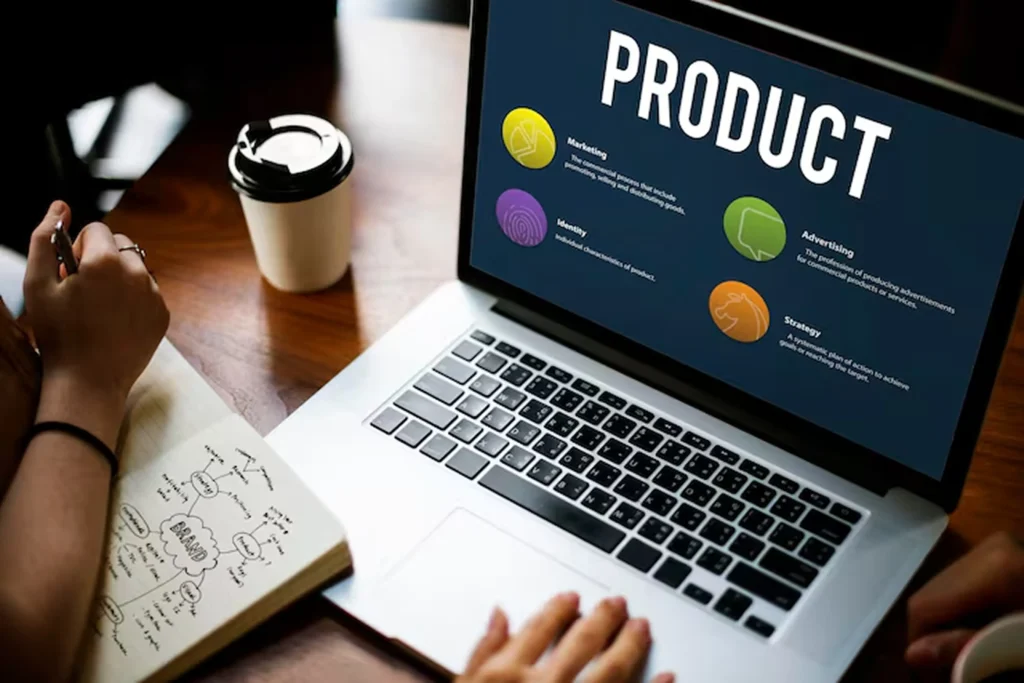
A Minimum Marketable Product (MMP) is the smallest version of a product that is good enough to be marketed, sold, and used by real customers. While an MVP is used mainly for learning and testing, an MMP is meant for generating value, either through user engagement, revenue, or scalability. In simpler terms, if MVP is about validating the idea, MMP is about launching it commercially.
While an MVP helps startups test the idea, an MMP (Minimum Marketable Product) takes the next step by making the product ready for real market adoption. At this stage, the product is not just functional but also polished, offering the right mix of usability, value, and reliability to attract paying customers. The key features of an MMP ensure that businesses can generate revenue, build trust, and establish a strong market presence.
An MMP must include a stable, reliable, and complete version of the product’s core functionality, the features that define the main use case, and solve the core problem for users.
MMP can support payment gateway integration like Stripe, Razorpay, etc, also MMP can help in making proper pricing plans.
An MMP provides a proper plan for a product to be executed in the market. Even if the AI product is technically sound and functionally complete, it won’t succeed without a clear plan to introduce it to your target users. Market-readiness isn’t just about functionality — it’s about positioning, accessibility, and visibility.
Performance and scalability are other important features product, as it states that the product isn’t just working — it’s working smoothly for many users without crashing or slowing down.
For AI startups, this is especially important since AI models can be heavy and complex. A good MMP should load fast, respond quickly, and handle a growing number of users with ease. Whether 10 or 10,000 people use the product, it should perform consistently.
Before jumping into building a market-ready product, it’s important to pause and reflect on what has already been learned from the MVP. MVP wasn’t just a product rather it was an experiment. This stage is all about reviewing real user feedback, understanding how people used your product, and identifying both strong and weak points. Did users find the AI model accurate? Were there features they ignored or struggled with? These insights will guide what to improve or remove. Think of it as reading your product’s report card — it shows exactly where to focus next.
Now that the feedback is gathered, the next step is to determine what the target users need and are willing to pay for. It’s not about adding more features, it’s about solving the right problem, in the right way, for the right people.
At this point, define your core audience and zero in on their pain points. You’re building something marketable now, so every feature should support a specific user goal or business outcome.
MMP is not just a technical upgrade; rather, it’s a business tool. This phase involves aligning product development with strategic goals. What should the product achieve? Are you aiming for your first paying customers, or are you trying to grow a loyal user base?
The answers here will affect what is built, how to price it, and how to market it. It’s about turning a product idea into a viable business solution — one that supports user needs and contributes to measurable growth.
Users will judge the product within seconds of using it, especially when it reaches a broader market. While MVPs can afford to be a bit rough around the edges, your MMP needs to offer a smooth, intuitive, and polished user experience.
From onboarding to daily use, every interaction should feel intentional and seamless. For AI products, this also means communicating what the model is doing, why it makes certain decisions, and how users can control the outcome. A better UX can turn hesitant users into active, loyal customers.
At this point, it’s time to build. Based on everything you’ve learned so far, from feedback to business goals, you now need to develop a stable, reliable, and functional version of the product that’s ready to be sold or adopted. It should include all must-have features, be performance-optimized, and be easy to maintain. This is not the final version of your product, but it is the first one you’re proud to put your name on and release to the world.
Now comes the real part — the first true launch of the product. Unlike MVP releases, this time you’re putting your product in front of a wider, more diverse audience. That means being ready with onboarding flows, help documentation, performance monitoring, and possibly even marketing campaigns. It’s not about perfection, but about delivering a solution users can genuinely rely on and talk about. The goal here is to see real traction and real impact.
Once the product is out in the market and is seeing signs of adoption, it’s time to plan for the next phase: scale. This means making sure the infrastructure can handle more users, AI models can manage more data, and the team is ready to support a growing customer base. Also in this phase, one can start looking at refining pricing models, automating key processes, and building out additional features. The goal here is to grow responsibly while continuing to deliver value to users.
When ChatGPT was first launched in the year 2022, it was not packed with every possible feature. It was a classic example of MVP and was made just for research purposes.
There were many reasons that made that product particularly an MVP, the first one being that it served the only function of core functionality, as it could only generate human-like responses based on the prompts; there were no plugins, no image support, no memory, just a raw conversational AI. It was launched quickly by OpenAI in the market to understand how users interact with this model.
This MVP phase revealed what users wanted from the chatbot, like better reasoning, context memory. Along with this, the MVP stage also helped in understanding where the model failed. This stage proved that the demand for something like this is very real, with around millions of users visiting it within 5 days.
Once OpenAI validated its concept through the MVP version of ChatGPT, which included the basic core functionality like generating human-like text, understanding context, and offering useful responses, it moved towards building a Minimum Marketable Product (MMP).
This next stage wasn’t about adding more random features; it was about making the product truly market-ready. The focus shifted to identifying the ideal target audience, refining the user journey, deciding the right monetization model, and preparing for sustainable growth.
OpenAI introduced structured offerings like ChatGPT Plus, integrated faster models like GPT-4, explored memory features, and added plugin support. They also implemented payment systems and explored pricing strategies to convert usage into recurring revenue. More importantly, this stage added a layer of polish, trust, and business alignment, all of which were essential for the broader adoption and long-term success of ChatGPT in the commercial AI landscape.
They would have built the user interest but no revenue. Also, after a point in time, the users might have gotten frustrated by the poor UX and the lack of long-term value because of the absence of features like plugins and memory.
If the MVP phase, which turned out to be an experimental phase, had been skipped, they could have spent months building the wrong versions and scaling something that users did not need.
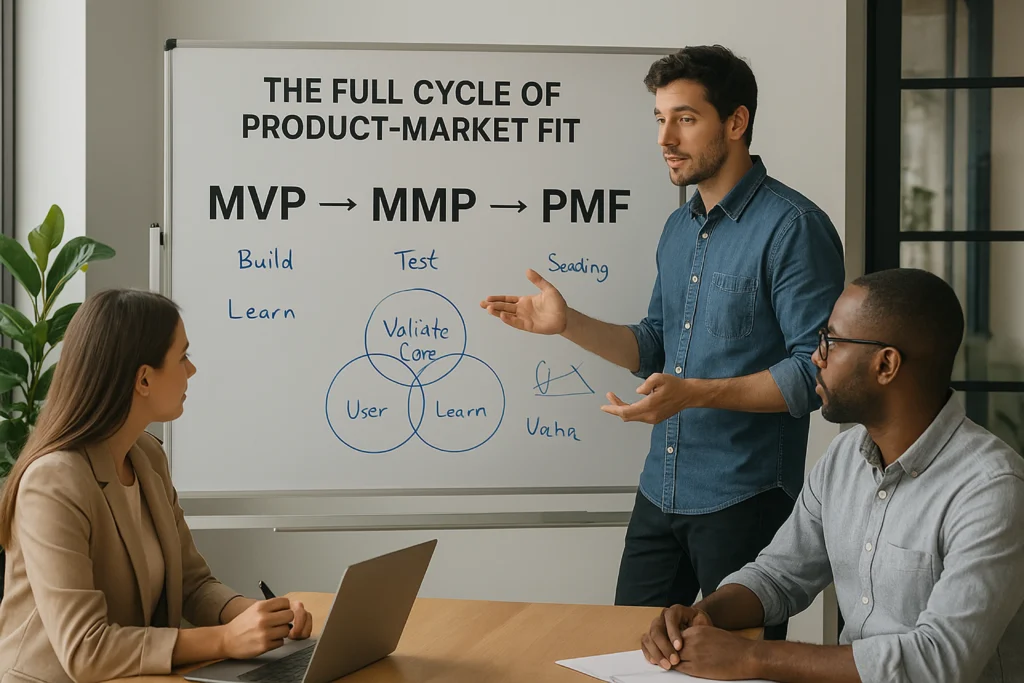
The MVP stage earlier helped them to validate their core product, and then the next stage helped them build something that is reliable, polished, and a scalable solution. This two-phase cycle is exactly what minimised the risk and maximised the market success.
AI products are complex as they involve expensive models, unpredictable user behavior, and ethical considerations. This is why both MVP and MMP turn out to be essential. The MVP stage helps in validating the core concept, and the MMP stage helps in making the market-ready solution.
| Category | MVP (Minimum Viable Product) | MMP (Minimum Marketable Product) |
|---|---|---|
Core Purpose |
To validate the idea and gather feedback from early users | To launch the product to market with enough value to attract customers |
Focus |
Testing core functionality | Delivering a complete, usable, and polished product |
Users Involved |
Early adopters, testers, and internal teams | Real paying customers or a wide public audience |
Functionality |
Only the must-have features to solve the core problem | Includes core features plus refinements, UX upgrades, and monetization |
Design & UX |
Bare minimum, functional, possibly rough edges | Smooth, user-friendly, and polished for wider adoption |
Speed to Market |
Fast weeks or even days | Slightly longer, but still agile (a few weeks to months) |
User Feedback Role |
Central — feedback determines the next iterations | Still important but more structured, often collected via metrics and CS |
Performance & Scalability |
May not be optimized for large audiences | Built to support growth, scale, and consistent performance |
Monetization |
Typically none — focus is on learning | Yes — includes pricing plans, subscriptions, or other revenue models |
Technology Used |
Often, simple, quick-to-deploy AI models or APIs | More robust, possibly custom-trained models and optimized pipelines |
Risk Level |
Low cost, low risk — meant to test and fail fast | Medium risk — product is launched, public reputation starts building |
Marketing Involvement |
Minimal, if any — mostly internal or limited outreach | Active marketing campaigns and user acquisition strategies begin |
Release Goal |
Learning what works and what doesn’t | Delivering value and achieving real market traction |
Measurement of Success |
Learning outcomes, usage patterns, and feedback volume | User growth, engagement, retention, revenue |
Examples |
ChatGPT research preview (Dec 2022), limited AI demo tools | ChatGPT Plus with GPT-4, Duolingo Max, Grammarly’s paid AI plans |
In today’s AI environment, success is not simply a matter of coming up with a great idea; rather, it is a matter of how well and efficiently you can execute on that idea and bring it into a product that’s usable, scalable, and worthwhile. That’s where Minimum Viable Product (MVP) and Minimum Marketable Product (MMP) fit in; not as a replacement for one another, but as sequential, complementary steps on the path to building a product.
Industry experts agree to the fact that MVP is like the first handshake of your product with the actual world, whereas MMP is the self-assured introduction that is prepared to go to a wider market. For AI startups, in particular, where product creation tends to encompass intricate machine learning models, vast infrastructure, and changing user behavior, bypassing either stage can result in squandered resources, untested hypotheses, or scaling too early.
At Samyak Infotech, we specialize in helping AI-focused companies and startups move seamlessly from concept to commercial success. From building lean, test-ready MVPs that validate your core idea to crafting market-ready MMPs that are scalable, secure, and monetizable, we offer end-to-end AI product development services tailored for real-world results. With experience across industries like healthcare, fintech, SaaS, edtech, and e-commerce, we understand what it takes to build AI products that not only work but win in the market.
Although it would be easy to jump directly to the release of a fully built product, particularly in rapidly evolving industries, bypassing either the MVP or MMP stage usually causes unnecessary delays, increased expenses, and mismatched user expectations.
The MVP ensures that you validate if your AI product addresses an actual problem, while the MMP readies it for broader market uptake by incorporating usability, performance, and scalability.
The timeline can vary based on the complexity of the product and the AI models involved, but here’s a general guideline:
Absolutely. Whether you’re in healthcare, fintech, logistics, e-commerce, education, or media, the principles of MVP and MMP apply universally, especially for AI-powered products.
No matter the industry, these stages help reduce risk, validate your idea with users, and build confidence for scaling, especially important when AI is involved due to its complexity and user trust issues.
Yes — and you absolutely should. Even without a technical background, many founders successfully bring AI products to market by partnering with the right product teams or agencies who can translate their vision into technical milestones.
Your role is to define the problem, understand your users, and stay close to the feedback loop. A good development partner can handle the tech side — from building an MVP to creating a scalable MMP — while keeping you involved in decision-making.
If you’re not sure where to begin, starting with an MVP is a low-risk, high-learning way to test your idea before making bigger investments.


©2026 Samyak Infotech Pvt Ltd. | All trademarks, images and logos are the property of their respective owners.
Our AI experts will help you prototype, automate, or build AI-powered solutions — risk-free.
⚡ Limited-time offer for new users.


 explore more