Tired of fixing bugs that appear after the deployment? What if you could easily catch those issues long before the code goes live? This is made possible by test-driven development (TDD). This is essentially a simple shift that alters the way software is developed.
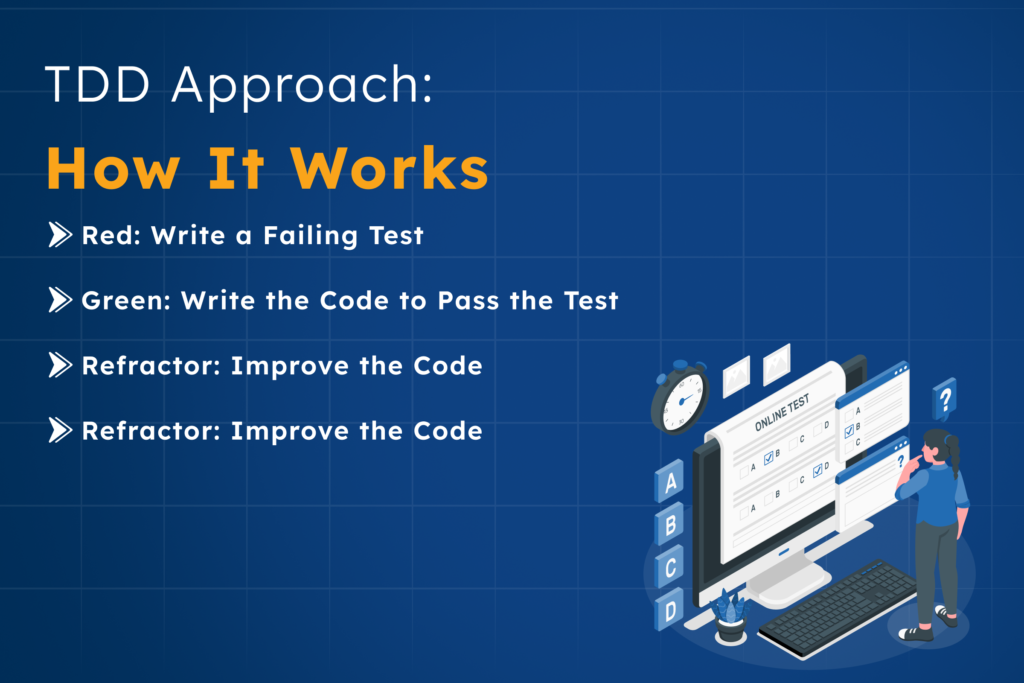
Instead of coding first and testing it later, TDD starts with a test. You write a small test, then only code it enough just to make it pass. This cycle is repeated till the time you end up getting a cleaner and more reliable software. Organizations following structured development practices, such as an offshore software development company, often rely on TDD to ensure quality from the start.
In this blog, we will explore what test-driven development is, how the TDD approach works, and the key benefits it offers. We will also look at when to use it, its real-world advantages, along the tips to make TDD a part of your daily workflow.
What is Test-Driven Development (TDD)?
Test-driven development (TDD) is basically a software development process, followed by modern software development companies, where tests come before the code. Instead of first writing the code and testing it later, the developers start by creating small, automated tests that can easily define what the code should do.
Once the test is written, the next step only involves writing the code that is enough to make the test pass. After that, the developer refines the code without making a change in how it works. This cycle goes on repeating for every new feature or function.
Thus, in simple words, TDD development focuses on writing reliable, bug-free code from the start. Each test that becomes part of the process acts as a safety net. If something breaks later, you will exactly know where and why. This turns out to be extremely important for businesses building complex products like custom AI solutions.
Example:
Imagine you are building a calculator app. You can add functions to add two numbers. In TDD, you first write a test that explains “If I add 2 and 3, the result will be 5,” then you write the simplest code to pass the test. Once the test passes, you can add more functions or even change the code with confidence. Every new feature that is added starts with a test first.
The idea of test-driven development came from agile methodology. It encourages developers to think about how their code will behave before they start coding. This leads to cleaner design, better logic, and more maintainable software.
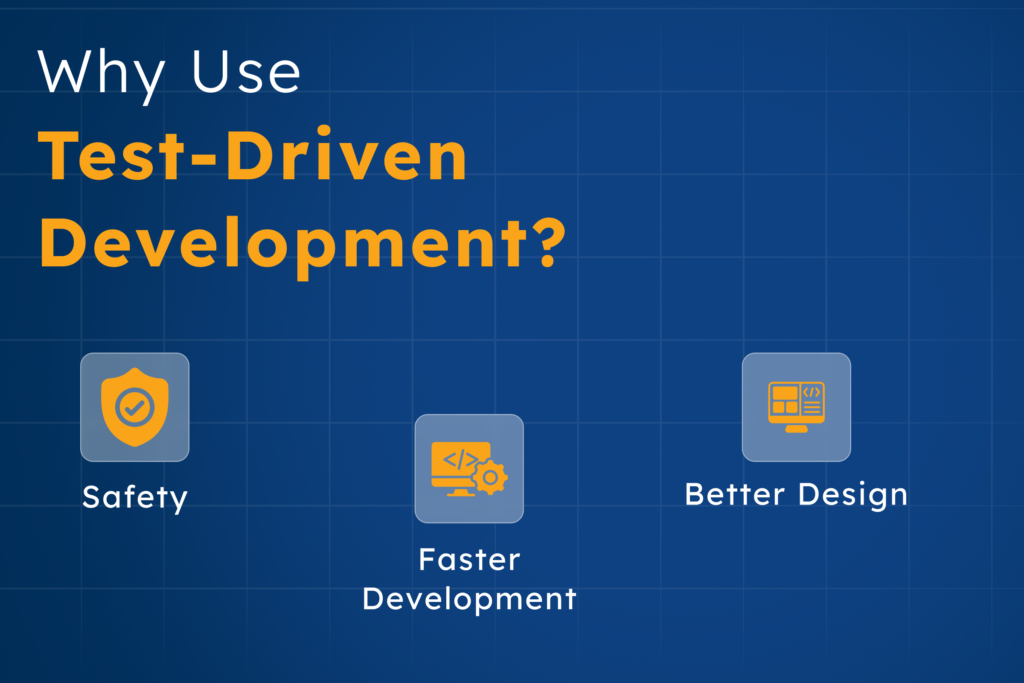
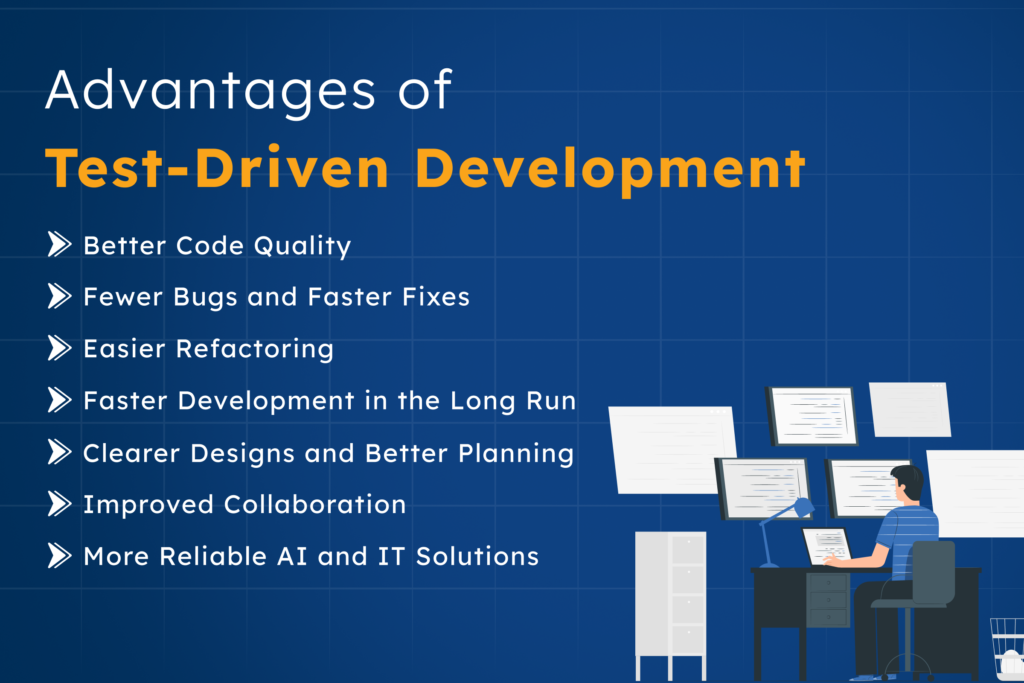
Many teams use TDD because it helps to reduce errors, improve confidence in the codebase, and also speeds up future development processes. Over time, it becomes a habit to consider that every new feature is built with quality in mind.










 explore more