Introduction
Managing freight networks across multiple carriers, modes, and geographies has never been simple — but fragmented tools and manual processes make it harder than it needs to be. Dispatchers work from spreadsheets. Billing errors go undetected. Customers call for status updates that nobody can answer quickly.
The numbers reflect this pressure: according to McKinsey, inefficient logistics handoffs account for 13%–19% of total logistics costs, representing up to $95 billion in annual U.S. economic losses. The root cause isn't margins — it's a visibility and coordination gap that compounds at every handoff.
Cloud-based Transportation Management Systems address this directly. This article covers:
- What a cloud TMS is and how it works
- How it compares to on-premise and custom-built alternatives
- The core features that drive operational value
- The business benefits it delivers
- How to evaluate which deployment model fits your operation
Key Takeaways
- A cloud-based TMS centralizes freight planning, carrier management, route optimization, tracking, and analytics on remote servers — accessible from any device.
- Unlike on-premise systems, cloud TMS requires no heavy IT infrastructure and updates automatically.
- Key benefits: lower costs, faster deployment, real-time supply chain visibility, and easy scalability.
- Standard freight operations suit off-the-shelf platforms; complex or unique workflows typically call for a custom-built solution.
What Is a Cloud-Based Transportation Management System?
A Transportation Management System (TMS) is software that automates the movement of physical goods across a supply chain. The scope is broad — a single platform handles:
- Order management and carrier selection
- Route planning and dispatch
- Freight billing and shipment tracking
Gartner defines TMS as software that supports "multimodal sourcing, planning, and execution of the physical transport of goods." Road, rail, air, and sea freight all fall within that definition.
What "Cloud-Based" Actually Means
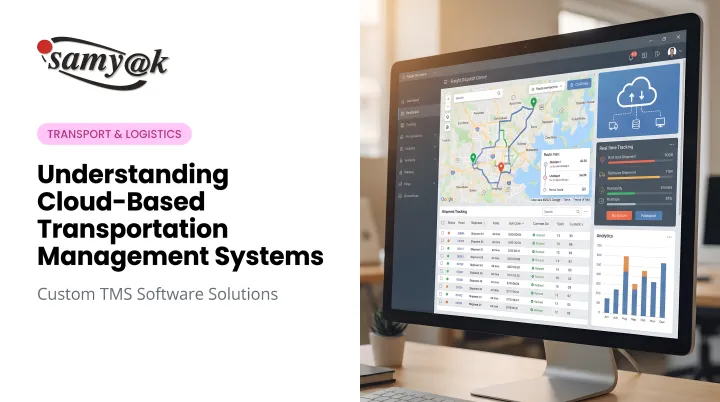
A cloud TMS is hosted on third-party servers — platforms like AWS, Microsoft Azure, or Oracle Cloud — and accessed via the internet. Nothing is installed on company hardware. Users log in from any device, and the vendor manages infrastructure, updates, and security patches.
This model is typically offered as Software-as-a-Service (SaaS), meaning you pay a subscription fee rather than purchasing a perpetual license. The vendor handles updates, security patches, and uptime.
Where TMS Fits in the Supply Chain Ecosystem
A TMS doesn't operate in isolation. It connects with:
- ERP systems — for order data, financial records, and customer information
- WMS platforms — for warehouse coordination and inventory synchronization
- ELD devices and carrier portals — for driver and shipment status
- Customer-facing portals — for self-service tracking and delivery ETAs
That integration is what gives a TMS its real operational weight — connecting procurement, warehousing, and last-mile delivery into one coherent view.
Cloud TMS vs. On-Premise vs. Custom: Understanding Your Options
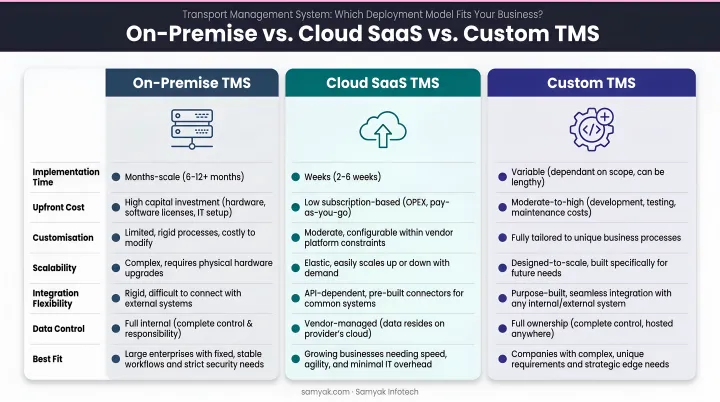
The right deployment model depends on your company's size, IT capacity, budget, and operational complexity. Here's how the three main options compare.
On-Premise TMS
On-premise TMS is installed and run on your own servers. You own the infrastructure, control the data, and manage every upgrade yourself.
The tradeoffs are significant:
- High upfront hardware and software license costs
- Dedicated in-house IT staff required for maintenance
- Upgrades are time-intensive and often delayed
- Difficult to access remotely without additional configuration
On-premise works well for large enterprises with stringent data sovereignty requirements and the IT resources to support it. For everyone else, the overhead is hard to justify.
Cloud-Based TMS
Cloud TMS is hosted and maintained by the vendor. You subscribe, configure, and start using it — typically within weeks rather than months.
Key advantages:
- Lower entry costs via subscription pricing
- Automatic updates with no internal IT lift
- Accessible from mobile or desktop, anywhere
- Scales with shipment volume without hardware changes
The main tradeoffs are dependency on internet connectivity and reliance on the vendor's security practices — both manageable with the right provider.
Custom-Built TMS
A custom TMS is built from the ground up to match your specific workflows, carrier relationships, and compliance requirements. Off-the-shelf platforms make assumptions about how freight operations run; a custom build makes no such assumptions.
This path suits businesses with non-standard freight flows, proprietary carrier networks, or industry-specific compliance demands. It requires a longer development timeline and a partner with genuine logistics domain expertise. Samyak Infotech has spent over 20 years building logistics software for Fortune 100 companies, developing custom cloud TMS platforms that cover route optimization, ERP integration, and compliance documentation — scoped precisely to each client's operations.
Comparison at a Glance
| Factor | On-Premise | Cloud (SaaS) | Custom-Built |
|---|---|---|---|
| Cost model | High upfront + ongoing maintenance | Monthly/annual subscription | Development investment + lower ongoing costs |
| Deployment time | Months | Weeks | Weeks to months (varies by scope) |
| Scalability | Hardware-limited | Near-unlimited | Designed to spec |
| Maintenance burden | Internal IT team | Vendor-managed | Vendor or internal |
| Customization | Limited | Configuration only | Full |
| Data control | Full | Shared with vendor | Full |
Core Features of a Cloud-Based TMS
Route Optimisation and Load Planning
A capable cloud TMS uses algorithms to calculate the most efficient delivery routes based on distance, traffic patterns, delivery windows, and vehicle capacity. The operational impact is direct: better routes mean lower fuel costs, fewer missed windows, and higher truck utilization.
Load planning tools build on this by maximizing truck fill rates and cutting empty miles — both of which directly reduce per-shipment cost.
Samyak Infotech's custom TMS solutions include advanced route optimization, with documented client results including a 25% rise in delivery route efficiency and 15% reduction in fuel costs for freight clients.
Real-Time Shipment Tracking and Visibility
Live track-and-trace gives dispatchers, operations teams, and customers accurate shipment status across all transport modes. When a delay occurs, the system surfaces it immediately — allowing proactive communication rather than reactive damage control.
Tive's 2024 State of Visibility survey of 244 supply chain professionals found that IoT device adoption for real-time shipment tracking more than doubled — rising from 25% in 2023 to 53% in 2024. For logistics teams still relying on manual check-ins or email updates, that gap in capability is widening fast.
Carrier Management and Freight Audit
Cloud TMS platforms centralize all carrier data — rates, contracts, lanes, and performance metrics — in one place. When a shipment needs booking, the system compares rates across carriers and recommends the optimal choice.
On the billing side, automated freight audit tools reconcile invoices against contracted rates and flag discrepancies. Manual invoice processes let billing errors accumulate undetected — automated auditing catches them before they're paid.
Key functions in this module typically include:
- Rate comparison across contracted and spot carriers
- Automated invoice-to-contract reconciliation
- Discrepancy flagging and dispute documentation
Analytics, Reporting, and Dashboards
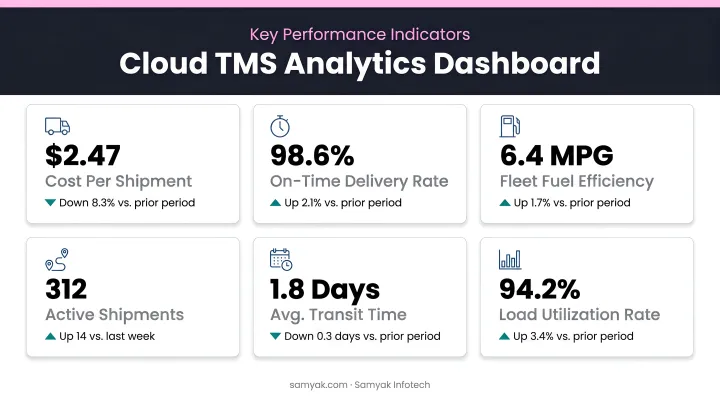
Operational data is only valuable if you can act on it. Cloud TMS platforms aggregate performance data into dashboards surfacing KPIs like:
- Cost per shipment by lane and carrier
- On-time delivery performance
- Carrier utilization rates
- Fleet idle time and fuel consumption
McKinsey estimates that visibility platforms combined with AI-based workflow automation can reduce logistics waste by up to 40%. For a mid-size freight operation, that translates to recoverable cost sitting in plain sight — just not yet visible.
ERP, WMS, and Third-Party Integrations
Modern cloud TMS solutions connect to the broader tech stack via APIs and EDI. Common integrations include:
- ERP systems for order data and financials
- WMS platforms for warehouse coordination
- ELD devices for driver hours and compliance
- Accounting software for invoice reconciliation
- Customer portals for self-service tracking
Samyak Infotech's TMS builds include EDI, API, and ERP integration as standard components, along with Google Maps API integration for real-time transit time calculations.
Benefits of Adopting a Cloud-Based TMS
Cost Reduction Across Operations
Cloud TMS eliminates upfront hardware investment and reduces administrative overhead through automation — carrier rate comparison, booking, billing, and audit all run with minimal manual intervention.
The cost impact is documented. Key figures from industry data:
- Shippers and 3PLs reduce annual transportation spend by 2%–5% with a TMS (source: Infios)
- Some users achieve 7% annual outbound freight cost reductions
- Samyak Infotech's logistics clients have documented 25% reductions in operational costs after custom TMS implementation
Ongoing subscription costs are also generally lower than the combined expense of maintaining on-premise infrastructure — server hardware, IT labor, and license renewal fees add up quickly.
Faster Deployment and Lower IT Burden
Cloud TMS can go live in weeks. There are no servers to configure, no software to install on workstations, and no internal IT team responsible for patching.
The vendor handles all maintenance, security updates, and uptime monitoring. Your IT resources stay focused on core business priorities rather than infrastructure management.
Scalability Without Capital Investment
Cloud architecture scales with your business — more users, higher shipment volumes, additional carrier relationships, and new geographic lanes can all be added without purchasing hardware or overhauling systems.
This is particularly valuable for businesses with seasonal peaks. A retailer handling holiday freight volumes doesn't need year-round infrastructure to match peak capacity. Cloud platforms flex up and down as demand shifts.
Improved Customer Experience
Descartes' 2024 consumer survey of 8,000 shoppers across Europe and North America found that 67% experienced delivery problems in the prior year, and 63% took action against the retailer or carrier as a result.
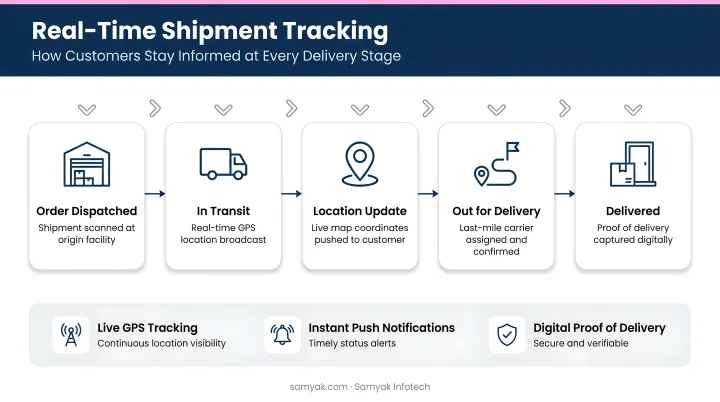
Real-time tracking visibility, optimized routing, and accurate billing translate directly into better delivery outcomes and stronger retention. Modern customers treat proactive status updates and accurate ETAs as baseline expectations, not a premium service.
Business Continuity and Disaster Recovery
Cloud TMS providers maintain automated backups, geographically distributed servers, and continuous uptime monitoring. A local hardware failure, power outage, or office disruption doesn't take down your operations.
On-premise systems don't offer this by default. Replicating enterprise-grade disaster recovery on your own infrastructure requires significant investment and expertise.
Evaluating and Implementing a Cloud TMS
Assess Your Operational Needs First
Before evaluating platforms, audit your current workflows and identify specific pain points:
- Where does manual effort create delays or errors?
- Which carrier or shipment data currently lives in spreadsheets or email?
- How interoperable are your existing ERP and WMS systems with external platforms?
- What features are genuinely required versus nice-to-have?
This exercise prevents paying for functionality you won't use — and ensures you don't discover integration gaps after go-live.
Vet Providers on Security, Uptime, and Support
Key questions to ask any cloud TMS vendor:
- What is your uptime SLA, and how is it measured?
- How is data encrypted in transit and at rest?
- Do you offer role-based access controls?
- What certifications do you hold (SOC 2, ISO 27001)?
- What does onboarding look like, and what ongoing support is included?
Established vendors such as Blue Yonder and Oracle maintain third-party security certifications and publish their compliance posture. Expect the same transparency from any provider you evaluate.
Off-the-Shelf vs. Custom: How to Decide
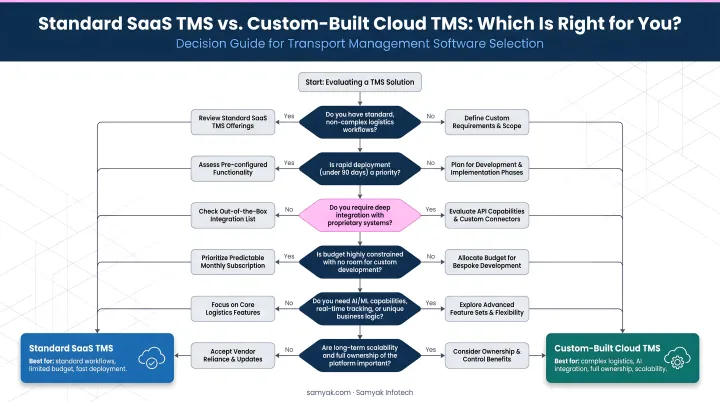
Standard cloud TMS platforms work well for freight operations that follow common patterns. If your operation fits a recognizable template, a configurable SaaS platform is likely the faster, lower-cost path.
Non-standard workflows tell a different story. Proprietary carrier contracts, industry-specific compliance requirements, complex multi-modal operations, or deep legacy system dependencies all push toward a custom-built cloud TMS. Forcing these operations into a generic platform typically means workarounds that create new inefficiencies.
Samyak Infotech's custom logistics software development handles exactly these scenarios. Solutions are built to match the operation, not the other way around, and typically include:
- Route optimization and real-time tracking
- EDI and ERP integration
- Compliance documentation workflows
- Analytics dashboards tailored to your KPIs
Frequently Asked Questions
What is a cloud-based transport management system (TMS)?
A cloud-based TMS is logistics software hosted on remote servers and accessed via the internet. It manages freight planning, carrier selection, route optimization, shipment tracking, and billing without on-site hardware or server management.
How does a TMS differ from an ERP?
An ERP manages broad business functions — accounting, HR, procurement, and order management. A TMS is specialized for transportation: carrier management, route optimization, freight billing, and shipment visibility. The two systems are commonly integrated so order and financial data flow between them automatically.
How much does a cloud-based TMS cost?
Pricing varies widely based on features, company size, and deployment model. SaaS platforms typically charge monthly per-user or per-shipment fees. Custom-built TMS solutions involve a one-time development investment with lower ongoing costs, and Samyak Infotech offers hourly, fixed-price, and dedicated team engagement models depending on scope.
What is cloud-based supply chain management?
Cloud-based supply chain management uses cloud-hosted software to coordinate the full flow of goods, information, and finances across a supply chain. A TMS is one component within this broader system, alongside ERP, WMS, and procurement platforms.
Is a cloud-based TMS secure?
Reputable cloud TMS providers implement industry-standard security: encrypted data transmission, role-based access controls, automated backups, and continuous monitoring. Providers commonly hold SOC 2 and ISO 27001 certifications. Modern cloud deployments are generally more secure than most on-premise infrastructure.
Can a cloud TMS be customised for specific industry needs?
Standard platforms offer configuration, not true customization. Businesses with specific compliance requirements, unique carrier networks, or non-standard workflows typically need a custom-built cloud TMS, developed by a logistics software specialist to fit their operational reality rather than forcing the operation to conform to the software.