Introduction
Modern manufacturers face a convergence of pressures that's difficult to ignore: labor shortages, supply chain disruptions, and global competition that rewards whoever operates leanest. According to Deloitte's 2025 Smart Manufacturing Survey, 92% of manufacturing executives believe smart manufacturing will be their primary competitive differentiator over the next three years — and 88% expect their investment to continue growing.
The industrial control and factory automation market reflects this urgency. MarketsandMarkets projects the sector will grow from USD $274.99 billion in 2025 to USD $435.24 billion by 2030 — a 9.6% annual growth rate that signals widespread adoption, not experimentation.
That growth is being driven by a clear need: manufacturers can no longer rely on manual workflows to stay competitive. Manufacturing process automation — using programmable systems, robotics, AI, and connected software to execute production tasks with reduced human intervention — has become a foundational requirement for shops of all sizes.
This article covers what you need to know to move forward:
- The types of automation available and when each fits
- The measurable efficiency benefits
- Real-world applications across the factory floor
- Common implementation challenges and how to address them
- A practical step-by-step roadmap for getting started
Key Takeaways
- 92% of manufacturers see smart automation as their top competitive driver over the next three years
- Automation delivers 10–20% production output gains and 7–20% employee productivity improvements on average
- Matching the right automation type to the right process is critical — five distinct types serve different operational needs
- Phased implementation reduces upfront capital risk for small and mid-sized manufacturers
- Custom software typically outperforms generic tools when automating legacy manufacturing environments
What Is Manufacturing Process Automation?
Manufacturing process automation is the application of programmable systems, control software, and intelligent machines to manage production workflows with minimal manual input. This covers a wide operational range: controlling temperatures, pressures, and material flow in continuous production environments, as well as automating assembly, inspection, and packaging of discrete physical goods.
Process Automation vs. Factory Automation
These two terms are often used interchangeably — incorrectly. The distinction matters when selecting the right approach.
| Process Automation | Factory Automation | |
|---|---|---|
| Focus | Controlling variables (temperature, pressure, flow) | Manufacturing and assembling physical products |
| Typical Industries | Oil refining, chemicals, food processing | Automotive, electronics, pharmaceuticals |
| Example | Automated temperature regulation in a reactor | Robotic assembly line for vehicle components |
Both fall under the broader umbrella of industrial automation. The International Society of Automation defines automation as the creation and application of technology to monitor and control the production and delivery of products and services — a definition broad enough to cover both.
From Mechanical Lines to Industry 4.0
Manufacturing automation has moved through distinct eras — from mechanical production lines and numerical control machining, through programmable logic controllers and flexible manufacturing systems, to today's AI-powered, cloud-connected Industry 4.0 environments.
The defining shift in modern automation is that it's now software-driven and data-centric. Machines don't just execute tasks — they generate the information needed to refine how those tasks are performed. That data layer is what separates a digitally mature factory from one that's simply mechanized.
Types of Manufacturing Process Automation
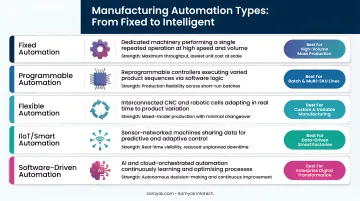
Choosing the wrong automation type for a given process is one of the most common and costly mistakes manufacturers make. Here's how each type works and where it fits.
Fixed (Hard) Automation
Pre-programmed machinery designed for one product, one sequence, very high volume. Think of automated stamping lines in automotive manufacturing — the same motion, thousands of times per shift.
- Strengths: Maximum throughput, low per-unit cost, extreme consistency
- Limitations: Expensive and time-consuming to reconfigure for new products
- Best for: High-volume, low-variation production environments
Programmable Automation
Systems controlled by Programmable Logic Controllers (PLCs) that can be reprogrammed between production runs. A batch electronics manufacturer running different circuit board configurations across shifts is a typical use case.
- Strengths: Flexibility across product batches
- Limitations: Changeovers require production downtime
- Best for: Multi-product environments with moderate volume per SKU
Flexible Automation
Computer-controlled systems that handle automatic changeovers without stopping the line. Different product variants can run simultaneously. Consumer goods and pharmaceutical manufacturers — where product variety is high and downtime is costly — benefit most here.
IIoT and Smart Automation
Interconnected machines and sensors that share real-time data across the facility. Deloitte found 46% of manufacturers have already implemented IIoT at the facility level. This infrastructure enables:
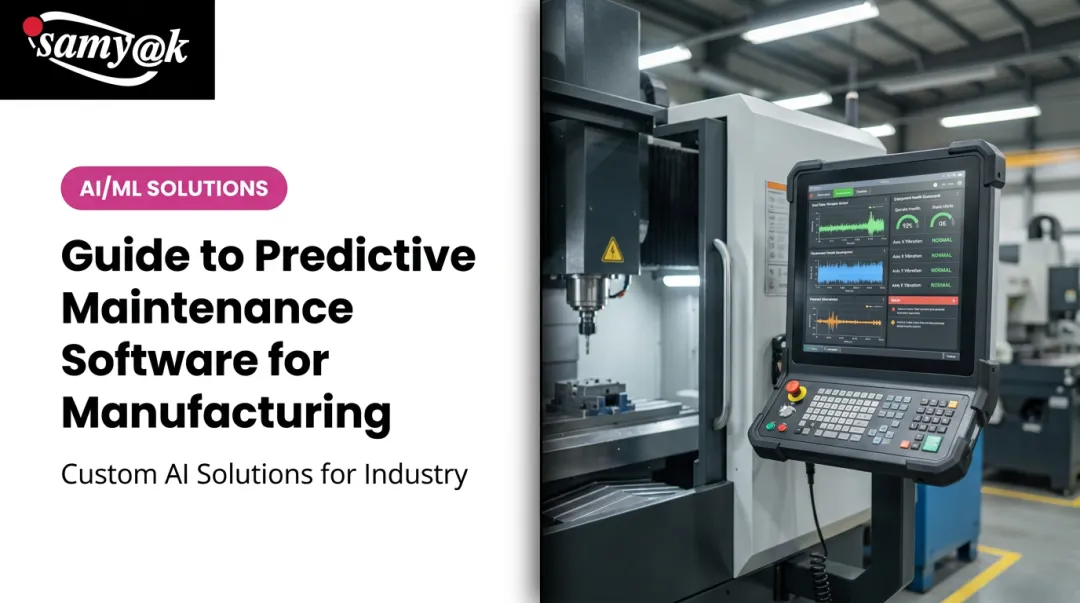
- Predictive maintenance before failures occur
- Live production monitoring against targets
- Data-driven process optimization across shifts and facilities
That real-time data layer is what makes the next category — software-driven automation — genuinely powerful rather than just reactive.
Software-Driven Automation (AI, ML, and RPA)
This category covers three distinct tools, each solving a different problem:
- AI and Machine Learning — quality inspection, demand forecasting, and process optimization
- Robotic Process Automation (RPA) — repetitive digital workflows like procurement processing, compliance reporting, and ERP data entry (Gartner defines RPA as software that automates business tasks by emulating human actions)
- Intelligent Automation — AI layered onto RPA, capable of handling unstructured data and making judgment-based decisions rather than just following rules
Because no two manufacturing environments share the same systems or constraints, these solutions almost always require custom development. Samyak Infotech has built real-time production monitoring systems integrating IoT sensors, data analytics, and machine learning for live anomaly detection and schedule optimization — with deployments spanning glass manufacturing and steel plants.
Key Benefits of Automating Manufacturing Processes
Increased Efficiency and Throughput
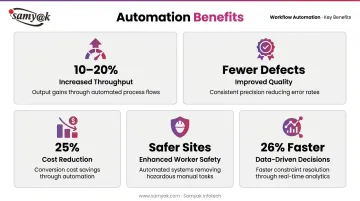
Automated systems operate continuously without fatigue, eliminating the bottlenecks created by shift changes, breaks, and human variability. According to Deloitte's 2025 survey, smart manufacturing initiatives deliver average improvements of 10–20% in production output and unlock 10–15% of previously constrained capacity.
Improved Quality and Consistency
Automated systems apply identical precision to every unit — no drift, no fatigue-related errors, no inspection misses, no shift-to-shift variation. This directly reduces defect rates, minimizes rework, and decreases warranty claims. AI-based visual inspection systems are particularly effective here, catching surface defects, dimensional errors, and assembly faults at line speed — something manual inspection cannot consistently match at scale.
Cost Reduction
BCG found that closing the manufacturing automation gap can reduce conversion costs by up to 25%. Automation achieves this through:
- Lower direct labor costs on repetitive tasks
- Reduced material waste via precision process control
- Optimized energy consumption through smart monitoring
- Fewer quality failures and their associated rework costs
Enhanced Worker Safety
Cost savings are only part of the picture. Automation also addresses one of manufacturing's persistent challenges: workplace safety. OSHA confirms that industrial robots are deployed to remove workers from dangerous conditions — heavy lifting, hazardous chemical handling, high-temperature operations, and repetitive strain tasks. This reduces injury rates while freeing employees to move into higher-skill roles that create more business value.
Data-Driven Decision-Making
Every automated system generates operational data: machine performance, defect rates, throughput, downtime causes. When fed into analytics dashboards, this data shifts plant management from reactive firefighting to proactive optimization. Deloitte's data shows manufacturers using this capability achieve a 26% reduction in mean time to constraint resolution — a direct operational performance gain.
Common Applications of Manufacturing Process Automation
Production Line Automation
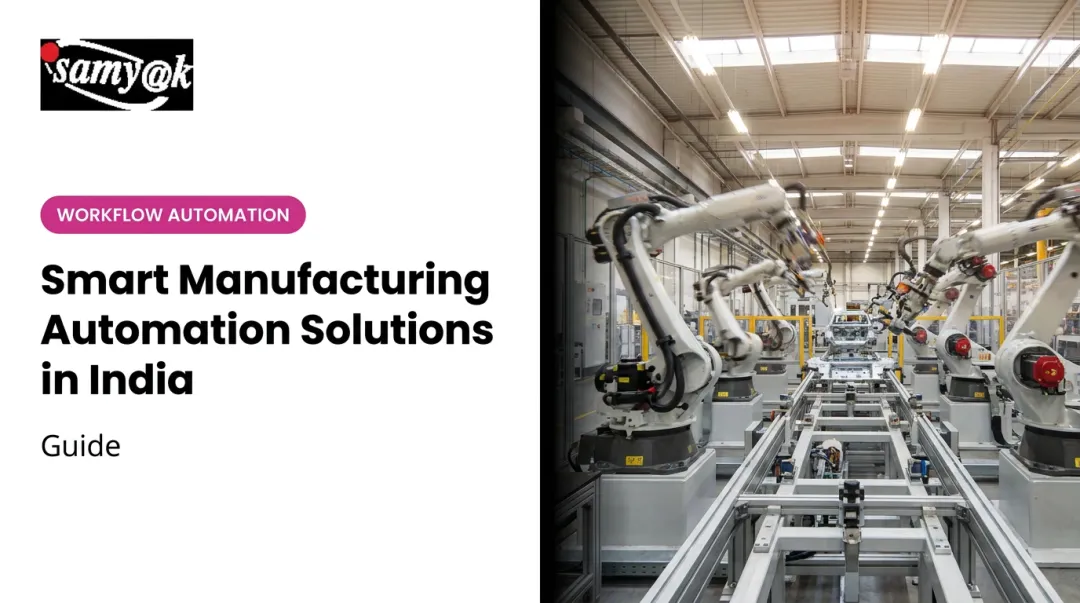
Robotics handle welding, painting, labeling, packaging, and material handling across assembly lines worldwide. According to the IFR World Robotics 2025 report, 4,664,000 industrial robots were in operation globally in 2024 — up 9% year over year — with 542,000 new units installed that year alone. Electrical/electronics manufacturers lead adoption at 24% of global installations, followed closely by automotive at 23%.
High-volume, repetitive production environments see the clearest ROI from robotic line automation: the fixed costs spread across massive unit volumes, and quality becomes machine-consistent rather than operator-dependent.
Quality Control and Inspection Automation
Machine vision systems and AI-powered defect detection now inspect every unit on the line — not just random samples. Automated inspection catches out-of-spec products in real time before they advance to downstream processes or ship to customers.
The business impact is measurable:
- Reduces scrap rates by catching defects at the source
- Eliminates rework costs on downstream-discovered problems
- Generates a complete quality data record that manual inspection can't replicate at scale
Inventory, Supply Chain, and Workflow Automation
Software automation handles the data-intensive workflows that run parallel to physical production: inventory tracking, demand forecasting, purchase order generation, and compliance reporting. McKinsey's research indicates AI can reduce inventory levels by 20–30% by improving demand forecasting accuracy.
These workflows connect to ERP platforms, manufacturing execution systems, and supply chain tools — and seamless integration across all of them typically requires custom development rather than off-the-shelf connectors.
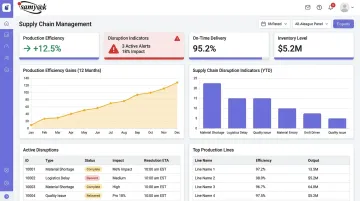
Samyak Infotech's supply chain management implementations have delivered measurable results for manufacturing clients, including:
- 35% increases in production efficiency
- 50% reductions in supply chain disruptions
Both outcomes were built on custom platforms designed around each client's specific operational requirements.
Challenges of Manufacturing Process Automation and How to Overcome Them
High Upfront Investment
Automation hardware, software licenses, infrastructure upgrades, and integration work represent significant capital expenditure — particularly for small and mid-sized manufacturers. Three approaches reduce this risk:
- Phase implementation: Automate one high-impact process first. Prove the ROI before the next investment.
- Build an ROI model upfront: Define expected savings in labor, scrap, downtime, and quality costs against implementation costs before committing.
- Consider custom-built software: A solution built to fit existing infrastructure often costs less than forcing an expensive enterprise platform to accommodate a manufacturing environment it wasn't designed for.
Workforce Transition and Upskilling
Automation changes job roles — it doesn't simply eliminate them. The World Economic Forum's Future of Jobs Report 2025 projects a net creation of 78 million jobs globally by 2030, with roles requiring digital and technical skills growing fastest. Manufacturers who invest in upskilling now build a workforce capable of operating and maintaining automated systems — and avoid the productivity loss of deploying technology that employees don't know how to use.
Deloitte found 48% of manufacturers already struggle to fill production roles, with 69–72% reporting moderate to severe challenges hiring IT, OT, and data roles. That skills gap makes upskilling a business priority, not just an HR concern. Early employee involvement in automation planning also reduces resistance and surfaces practical implementation knowledge that managers frequently overlook.
Integration with Legacy Systems
Most manufacturing facilities run a mix of modern and older equipment that wasn't designed to communicate with each other. This gap between IT systems and operational technology on the shop floor is a recognized barrier to smart manufacturing. Three practical approaches help close that gap:
- Choose automation solutions built on open APIs and industry-standard protocols
- Work with a technology partner who understands both manufacturing operations and software integration complexity
- Use middleware to connect legacy equipment to modern ERP or MES platforms without replacing functional machinery
Samyak Infotech specializes in building software middleware for exactly this scenario, bridging ERP systems and shop floor machinery so operations managers get live production data inside their existing enterprise platforms.
How to Implement Manufacturing Process Automation: A Step-by-Step Approach
Step 1 — Conduct a Process Audit and Prioritize
Map every manufacturing workflow and apply the 80/20 principle: roughly 20% of your processes account for 80% of your inefficiency, downtime, and quality failures. These are your starting points. Focus on processes that are:
- Repetitive and high-volume
- Error-prone or quality-critical
- Physically demanding or safety-hazardous
- Current bottlenecks for throughput
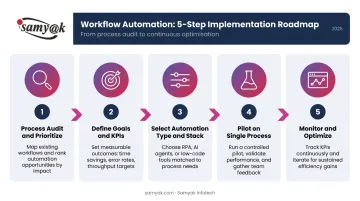
Step 2 — Define Clear Goals and KPIs
Every automation initiative needs measurable targets before technology selection begins. Examples:
- Reduce defect rate from 3.2% to under 1%
- Cut average cycle time by 25%
- Reduce unplanned downtime from 18 hours/month to under 5 hours
These KPIs guide technology selection and give you objective criteria to evaluate success post-implementation.
Step 3 — Select the Right Automation Type and Technology Stack
Match the automation type to the process:
- Fixed automation for high-volume, single-product repetitive production
- Flexible automation for varied product lines requiring fast changeovers
- AI/software automation for data-intensive workflows and inspection
Then determine whether an off-the-shelf platform or custom-built software better fits your specific operational environment and integration requirements.
Step 4 — Pilot on a Single Process Before Scaling
Run a controlled pilot on your highest-priority process. Measure it against the KPIs from Step 2. Document what worked, what didn't, and what you'd do differently. McKinsey research flags "pilot purgatory" — running pilots indefinitely without scaling — as one of the most common Industry 4.0 failure modes. The pilot's purpose is to validate the approach and build a scaling roadmap, not to be a destination in itself.
Step 5 — Monitor Continuously and Optimize
Post-deployment, track automation performance against your defined KPIs using real-time dashboards and automated reporting. Sustained performance depends on three ongoing activities:
- Spotting new opportunities — data patterns reveal where automation can extend further
- Catching degradation early — automated alerts surface issues before they affect output
- Informing expansion decisions — performance data drives the next phase of your roadmap
Manufacturers who build this monitoring layer in from day one consistently outperform those who treat deployment as the finish line.
Frequently Asked Questions
What are the 4 stages of manufacturing process automation?
The four stages move from mechanization (replacing manual labor with machines) → automation (machines operating without human control) → integration (connecting systems across the facility) → intelligent automation (AI-driven self-optimization). Each stage builds on the last, with intelligent automation representing the Industry 4.0 endpoint most manufacturers are working toward.
What is the 80/20 rule for manufacturing process automation?
The Pareto Principle applied to automation means roughly 20% of your production processes account for 80% of your inefficiencies, errors, or downtime. Identifying and automating those high-impact processes first delivers the greatest return on your automation investment.
Is RPA considered AI in manufacturing process automation?
RPA automates rule-based, repetitive digital tasks by following predefined instructions — it does not learn or adapt on its own. When AI and machine learning are layered onto RPA, the result is Intelligent Automation: a system that handles unstructured data and makes judgment-based decisions within manufacturing workflows.
What are the 5 D's of manufacturing process automation?
The 5 D's framework identifies the categories of manufacturing work most suitable for automation: Dull (repetitive tasks), Dirty (hazardous or unclean environments), Dangerous (high-risk operations), Dear (high-cost manual labor), and Difficult (physically or cognitively demanding tasks). If a process falls into one or more of these categories, it's a strong automation candidate.
What is the difference between factory automation and process automation?
Factory automation focuses on the physical manufacture and assembly of products — robotic assembly lines being the clearest example. Process automation controls continuous production variables like temperature, pressure, and flow within systems such as chemical plants or refineries. Both fall under industrial automation but address fundamentally different operational challenges.
How do you measure ROI from manufacturing process automation?
Track these metrics against your total implementation costs (hardware, software, training, integration) over a defined payback period:
- Reduction in direct labor costs
- Decrease in defect and scrap rates
- Improvement in throughput and cycle time
- Reduction in unplanned downtime hours
- Energy cost savings
Compare pre- and post-automation baselines for each metric. Deloitte's verified benchmarks — 10–20% output gains, 7–20% productivity improvements — provide reasonable initial targets for ROI modeling.